English:
This project aims to curate a comprehensive collection of films and interviews featuring one of Cuba’s most influential filmmakers of the 21st century. Within this archive, you will have access to a series of interviews conducted over the years and a freely available selection of his filmography. The objective is to provide a resource that deepens the understanding of his contributions to cinema both as an innovative filmmaker and an individual.
----------------------------------------------------------------------------------------------------------------------------------------------------------------
Español:
Este proyecto tiene como objetivo curar una colección exhaustiva de películas y entrevistas que destacan a uno de los cineastas más influyentes de Cuba en el siglo XXI. Dentro de este archivo, tendrás acceso a una serie de entrevistas realizadas a lo largo de los años y a una selección de su filmografía disponible de forma gratuita. El propósito es ofrecer un recurso que profundice en la comprensión de sus contribuciones al cine, tanto como cineasta innovador como individuo.

(Image of Fábula )
Roadmap for Project:
First, read the introduction page title "Introducing Lester Hamlet: A Pivotal Figure in Contemporary Cuban Cinema"
Secondly, watch both of Lester Hamlet’s available films, Casa Vieja and Tres Veces Dos.
Thirdly, watch the recent interview with Jack Riordan, while following along with the annotations.
Plus material: Lester's Relationship with his Father (Trauma + Exile), watch other curated interviews such as the interviews with: Amaury Pérez, Yadira Otero, or Marco en Marcos.
Lester Hamlet’s debut film, Tres Veces Dos, is a full-length feature that showcases three short films by emerging Cuban filmmakers of the early 2000s: Pavel Giroud, Lester Hamlet, and Esteban Insausti. Each of these directors would later achieve national and international recognition, becoming award-winning filmmakers celebrated around the world.
----------------------------------------------------------------------------------------------------------------------------------------------------------------
Mapa Para el Proyecto:
Primero, lee la introducción "Presentación de Lester Hamlet: Una Figura Clave en el Cine Cubano Contemporáneo".
Segundo, mira ambas películas disponibles, Casa Vieja y Tres Veces Dos.
Tercero, mira la más reciente entrevista con Jack Riordan, mientras lees las anotaciones adicionales.
Material Plus: La Relación de Lester con su Padre (Trauma + Exilio), ver las otras entrevistas elegidas como con: Amaury Pérez, Yadira Otero, o Marco en Marcos.
La película debut de Lester Hamlet, Tres Veces Dos, es un largometraje que presenta tres cortometrajes de cineastas cubanos emergentes de principios de los 2000: Pavel Giroud, Lester Hamlet y Esteban Insausti. Cada uno de estos directores lograría posteriormente reconocimiento nacional e internacional, convirtiéndose en cineastas galardonados y celebrados en todo el mundo. :)
Tres Veces Dos
Casa Vieja is arguably one of Lester Hamlet's most acclaimed films, a modern-day adaptation of the play Casa Vieja by Abelardo Estorino in 1964.
----------------------------------------------------------------------------------------------------------------------------------------------------------------
Casa Vieja es posiblemente una de las películas más aclamadas de Lester Hamlet, una adaptación moderna de la obra teatral Casa Vieja de Abelardo Estorino, escrita en 1964.
Casa Vieja
After watching 2 of Lester Hamlet's most well-known films, the interview with Jack Riordan is the one that best provides valuable insight into Lester Hamlet's current relationship with Cuba as an artistic exile. He opens up about the role of censorship in Cuba while he lived there, his inspirations for becoming a filmmaker, the current geopolitical situation in Cuba, and much more.
----------------------------------------------------------------------------------------------------------------------------------------------------------------
Tras ver dos de las películas más conocidas de Lester Hamlet, la entrevista con Jack Riordan es la que mejor ofrece una visión valiosa sobre la relación actual de Lester Hamlet con Cuba como exiliado artístico. En ella, él habla abiertamente sobre el papel de la censura en Cuba mientras vivía allí, sus inspiraciones para convertirse en cineasta, la situación geopolítica actual en Cuba y mucho más.
Interview with Jack Riordan / Entrevista con Jack Riordan (2025)
Interview with Jack Riordan
Annotations
00:00 - 00:41
Introducción de Lester Hamlet
00:00 - 00:41
Introduction of Lester Hamlet
00:41 - 01:06
Videoclip de su primera película "Tres Veces Dos" (2004)
00:41 - 01:06
Video clip of his first film "Tres Veces Dos" (2004)
01:13 - 01:54
Videoclip de su segunda película "Casa Vieja" (2010)
01:13 - 01:54
Video clip of his second film "Casa Vieja" (2010)
01:54 - 03:20
Videoclip de su tercera película "Fábula" (2011)
01:54 - 03:20
Video clip of his third film "Fábula" (2011)
03:20 - 03:30
Conclusión de la introducción de Lester Hamlet
03:20 - 03:30
Conclusion of Lester Hamlet Introduction
03:30 - 04:06
Educación
03:30 - 04:06
El Éxodo del Mariel, también conocido como Mariel Boatlift, fue una migración masiva de cubanos a Estados Unidos que tuvo lugar entre abril y octubre de 1980. Lleva el nombre del puerto de Mariel, ubicado cerca de La Habana, Cuba, donde miles de cubanos abordaron embarcaciones para salir del país.
03:30 - 04:06
Upbringing
03:30 - 04:06
Mariel's Exodus, also known as the Mariel Boatlift, was a mass migration of Cubans to the United States that took place between April and October 1980. It is named after the port of Mariel, located near Havana, Cuba, where thousands of Cubans boarded boats to leave the country.
04:05 - 05:00
Videoclip de su cuarta película "Ya no es antes" (2016)
04:05 - 05:00
En la película "Ya no es antes", los dos protagonistas principales son Luis Alberto García Jr. e Isabel Santos. Su química en pantalla es posiblemente uno de los romances amorosos más icónicos y conocidos que existen en el cine cubano. Sus ejemplos más conocidos son Clandestinos de 1989 de Fernando Pérez y la comedia Adorables Mentiras de 1991.
04:05 - 05:00
Video clip of his fourth film "Ya no es antes" (2016)
04:05 - 05:00
In the film "Ya no es antes," the two main stars are Luis Alberto Garcia Jr. and Isabel Santos. Their on the screen chemistry is arguably one of the most iconic and well known love romances to exist in Cuban cinema. Their most well known examples are Fernando Pérez's 1989 Clandestinos, and the 1991 comedy Adorables Mentiras.
05:25 - 05:54
Cecilia Valdés es una de las figuras más icónicas de la literatura y la cultura cubana, originalmente protagonista de la famosa novela "Cecilia Valdés o El Cerro del Ángel" ("Cecilia Valdés o La Loma del Ángel") escrita por Cirilo Villaverde en 1839 (con una versión más completa publicada en 1882).
05:25 - 06:30
Para Lester, las dos películas cubanas que más impacto tuvieron en su juventud fueron Cecilia y Lucía.
05:25 - 05:54
Cecilia Valdés is one of the most iconic figures in Cuban literature and culture, originally the protagonist of the famous novel "Cecilia Valdés or The Angel's Hill" ("Cecilia Valdés o La Loma del Ángel") written by Cirilo Villaverde in 1839 (with a more complete version published in 1882).
05:25 - 06:30
For Lester, the two Cuban films that had the most impact in his youth were Cecilia and Lucia.
05:54 - 06:08
En 1982, uno de los cineastas cubanos más reconocidos de todos los tiempos, Humberto Solás, estrena la adaptación cinematográfica de Cecilia.
05:54 - 06:08
In 1982, one of the most recognized Cuban filmmmakers of all time Humberto Solás premieres the film adaptation of Cecilia.
06:21 - 06:28
"Lucía" es una de las películas más famosas y aclamadas por la crítica de la historia del cine cubano. Fue dirigida por Humberto Solás, el mismo director que hizo Cecilia, y se estrenó en 1968.
06:21 - 06:28
"Lucía" is one of the most famous and critically acclaimed films in Cuban cinema history. It was directed by Humberto Solás — the same director who made Cecilia — and released in 1968.
06:34 - 07:42
Clip de Ya no es antes
06:34 - 07:42
Clip of Ya no es antes
07:08 - 07:59
Lester Hamlet habla de los problemas de la censura, aludiendo a cómo un sistema político dictatorial crea una especie de modelo de autocensura por motivos de seguridad personal. Cree que la forma más severa de censura es la que se aplica personalmente. Admite haber luchado por encontrar el equilibrio adecuado entre las críticas al gobierno y mantener su trabajo como cineasta.
07:08 - 07:59
Lester Hamlet talks about the problems of censorship, alluding to how a dictatorial political system creates a sort of self-censorship model because of personal safety. He believes the most severe form of censorship is the one inflicted personally. He admits to struggling to find the right balance of criticism of the government and keeping his job as a filmmaker.
07:58 - 09:07
El padre de Arturo (Interpretado por Fernando Hechevarria) le confiesa a Arturo (Interpretado por Carlos Luis González) que los que se van de la isla son "cabrones".
07:58 - 09:07
Este clip continúa con la sección de ser crítico con el gobierno cubano y el sistema vigente, pero desde una perspectiva matizada. Este es un enfoque común en gran parte del cine cubano.
07:58 - 09:07
The father of Arturo ( Played by Fernando Hechevarria) confeses to Arturo (Played by Carlos Luis González) how those who leave the island are "bastards".
07:58 - 09:07
This clip follows up to the section of being critical of the Cuban government and the system in place, but from a nuanced perspective. This is a common approach for much of Cuban Cinema.
09:15 - 09:42
Lester Hamlet hablando sobre las etapas de la producción cinematográfica en Cuba. Antes de que una película se proyecte a nivel nacional o se muestre en la televisión local, pasa por un proceso de investigación por parte de productores, políticos y ejecutivos.
09:15 - 09:42
Lester Hamlet talking about the stages of film production in Cuba. Before a film is screened nationally, or showing on the local televisión, it has a vetting process from producers, politicians and executives.
09:42 - 12:59
Una de las razones por las que Lila es una parte tan impactante de la historia del cine cubano es porque el protagonista de la película, un joven revolucionario, resulta ser el villano. El antihéroe. Para una película, que es producida y financiada por el ICAIC, pintar o criticar abiertamente a una figura revolucionaria es poderoso e impactante.
09:42 - 12:59
Cuando Lester menciona a Lila, se refiere a su parte de la película completa Tres Veces Dos. Tres Veces Dos se divide en 3 cortometrajes separados. La primera parte está a cargo de Pavel Giroud, la segunda parte de Lester Hamlet (Lila) y la tercera de Esteban Insausti.
09:42 - 12:59
One of the reasons that Lila is such an impactful part of Cuban film history is because the protagonist of the film, a young revolutionary member, turns out to be the villain. The anti-hero. For a film, that is produced and funded by the ICAIC, to openly paint or critize a revolutionary figure is powerful and shocking.
09:42 - 12:59
When Lester mentions Lila, he is refering to his part of the full movie Tres Veces Dos. Tres Veces Dos is split into 3 separate short films. The first part is done by Pavel Giroud, the second part by Lester Hamlet (Lila), and the third by Esteban Insausti.
13:02 - 13:38
Lester habla de la primera vez que salió de Cuba y de cómo le prohibieron regresar. Convirtiéndose así en un exiliado político. Afirma que fue entonces cuando realmente entendió qué era el comunismo.
13:02 - 14:00
Lester speaks about the first time he left Cuba, and how he was banned from returning. Thus becoming a political exile. He states that this was when he really understood what communism was.
13:38 - 14:10
"Cuba no es un país. No se puede entender a Cuba, ni se puede analizar a Cuba como se analiza un país, porque en Cuba no hay libertades. Cuba es una finca, con un grupo de dueños que tienen escuelas que no funcionan, hospitales que no funcionan, servicios que le brindan a un grupo de personas que viven en esa finca, entre ellos estaba yo".
13:38 - 14:10
"Cuba isn't a country. You can't understand Cuba, nor can you analyze Cuba as you would analyze a country, because in Cuba there is no freedoms. Cuba is a farm, with a group of owners who have schools that do not function, hospitals that do not work, services that they provide to a group of people who live in that farm, among them was myself."
14:10 - 15:09
Lester siente que desperdició los mejores años de su vida en Cuba, un proyecto fallido y desmoronado. Él odia que él
14:10 - 15:09
Lester Hamlet es un director abiertamente gay y ha hablado abiertamente de cómo la homosexualidad fue percibida y tratada como una enfermedad en Cuba durante muchas décadas durante la Revolución. Es tristemente célebre que en Cuba existieran campamentos de las UMAP entre 1965 y 1968. Se trataba de un sistema para rehabilitar elementos "indeseables" de la sociedad mediante el trabajo "productivo", pero en realidad era una forma de internamiento y castigo. Colocar efectivamente a artistas y homosexuales en estos campos con duras condiciones de vida y abuso físico y psicológico extremo.
14:10 - 15:09
Lester feels that he wasted the best years of his life to Cuba, a failed and crumbling project. He hates that he
14:10 - 15:09
Lester Hamlet is an openly gay director and has been outspoken about how homosexuality was perceived and treated as a dissease in Cuba for many decades during the Revolution. Infamously in Cuba from 1965-1968 UMAP camps existed. These were a system to rehabilitate "undesirable" elements of society through "productive" labor, but in reality, it was a form of internment and punishment. Effectively placing artists and homosexuals in these camps with harsh living conditions and extreme physical and physological abuse.
16:14 - 18:07
Clip de Fábula que toca el tema del engaño y el engaño.
16:14 - 18:07
Clip from Fábula that touches on the topic of cheating and deceit.
18:07 - 19:15
Hablando de la crisis, la crisis de la libertad de expresión y los presos políticos. Lester habla de cómo quienes viven en Cuba no son capaces de decir abiertamente que hay una crisis. Incluso pacíficamente.
18:07 - 19:15
Speaking about the crisis, the crisis of free speech and political prisoners. Lester speaks about how those who live in Cuba, aren't able to openly stating that there is a crisis. Even peacefully.
19:13 - 20:06
Además de su discurso criticando que en realidad no hubo un momento de prosperidad dentro de Cuba, el Himno Nacional Cubano suena de fondo.
19:13 - 20:06
Over his speech criticism of how there wasn't really a moment of prosperity within Cuba, the Cuban National Anthem plays in the background.
19:15 - 19:50
Lester habló recientemente con un amigo, quien afirmó que "solía ser mejor", y Lester preguntó cuándo. Porque siente que Cuba nunca ha sentido ni visto un momento de felicidad o de libertad.
19:15 - 19:50
Lester spoke with a friend recently an, who stated that it "used to be better," with Lester asking when. Because he feels that Cuba has never felt or seen a moment of happiness or freedom.
19:40 - 20:05
Cuba es un país que ha tenido intensos momentos de grandes éxodos. El más notable sería la Revolución Cubana de 1959, en la que una gran población de Cuba huyó a los Estados Unidos. Este grupo de personas eran médicos, abogados, científicos y otros miembros de la clase alta que se beneficiaron del Régimen de Batista.
19:40 - 20:05
La mayor ola migratoria desde Cuba se da en los últimos 6 años, desde 2019 hasta el presente, donde se incluye Lester. Salió de Cuba en 2021 durante la pandemia de COVID-19.
19:40 - 20:05
Cuba is a country which has had intense moments of major exoduses. The most notable one would be with the 1959 Cuban Revolution, which saw a large population of Cuba flee to the United States. This group of people were doctors, lawyers, scientists and other members of the higher class who benefited from the Batista Regime.
19:40 - 20:05
The largest migrant wave from Cuba is in the last 6 years, from 2019-Present, where Lester includes himself. He left Cuba in 2021 during the COVID-19 pandemic.
20:40 - 20:52
Lester menciona aquí cómo en Cuba, culpar al embargo estadounidense por las sombrías condiciones de Cuba es un escudo organizado por el gobierno cubano.
20:40 - 20:52
El embargo estadounidense a Cuba, también conocido como "el bloqueo" en Cuba, es una serie de sanciones económicas y restricciones comerciales impuestas por Estados Unidos a Cuba, a partir de 1960 durante la Guerra Fría. Se inició en respuesta a la nacionalización de propiedades de propiedad estadounidense por parte de Cuba y su alineación con la Unión Soviética, con el objetivo de presionar al gobierno cubano para que realizara un cambio político. El embargo limita el comercio de empresas estadounidenses con Cuba, restringe los viajes y bloquea las transacciones financieras, aunque permite algunas excepciones para bienes humanitarios como alimentos y medicinas. A pesar de su larga duración, el embargo sigue siendo un tema polémico, con debates sobre su eficacia y su impacto en el pueblo cubano.
20:40 - 20:52
Lester mentions here how in Cuba, blaming the US Embargo for the bleak conditions of Cuba is a shield which is organized by the Cuban Government.
20:40 - 20:52
The U.S. Cuba embargo, also known as "el bloqueo" in Cuba, is a series of economic sanctions and trade restrictions imposed by the United States on Cuba, beginning in 1960 during the Cold War. It was initiated in response to Cuba's nationalization of American-owned properties and its alignment with the Soviet Union, aiming to pressure the Cuban government into political change. The embargo limits U.S. businesses from trading with Cuba, restricts travel, and blocks financial transactions, though it allows some exceptions for humanitarian goods like food and medicine. Despite its long duration, the embargo remains a contentious issue, with debates over its effectiveness and impact on the Cuban people.
21:23 - 22:52
Clip sobre el trauma de perder a alguien que intentó llegar a Estados Unidos en un barco casero.
21:23 - 22:52
Clip about trauma of losing someone who tried to reach the United States via a homemade Boat.
22:53 - 23:15
Lester criticando a Fidel Castro.
22:53 - 23:15
Lester critizing Fidel Castro.
23:15 - 02:00
Clip de un documental de ADN Cuba. Sigue a un hombre anónimo que critica abiertamente a Cuba y al régimen comunista. Se declara alguien que creyó en la agenda comunista, pero después de vivirla durante siglos, la odia. Dentro de los clips, se le presentan varias personas que expresan sus dificultades. Alimentos, agua potable, medicinas, etc.
23:15 - 02:00
Clip from a documentary by ADN Cuba. It follows an unnamed man who openly criticizes Cuba and the communist regime. Declares himself someone who believed in the communist agenda, but after living it for centuries, hates it. Within the clips, you are presented with several people who express their difficulties. Food, clean water, medicine, etc.
05:00 - 25:00
Lester Hamlet menciona al nuevo presidente de Cuba, Miguel Díaz-Canel. Expresa que no tiene seguidores, nadie lo eligió, no tiene un liderazgo natural. Fue colocado allí para contener los bienes de otros.
05:00 - 25:00
Miguel Díaz-Canel es el presidente de Cuba y asumió el cargo el 19 de abril de 2018, siendo el primer líder no castrista en casi seis décadas. Nacido en 1960, ascendió en las filas del Partido Comunista y se desempeñó como Primer Vicepresidente durante el gobierno de Raúl Castro antes de sucederlo. Si bien representa un cambio generacional, Díaz-Canel ha mantenido en gran medida las políticas socialistas de Cuba en medio de los continuos desafíos económicos y las sanciones de Estados Unidos. Su liderazgo enfrenta escrutinio por manejar protestas y llamados a reformas.
05:00 - 25:00
Lester Hamlet mentions Cubas new president, Miguel Díaz-Canel. Expresses that he has no followers, no one elected him, he has no natural leadership. He was placed there to contain the goods of others.
05:00 - 25:00
Miguel Díaz-Canel is the President of Cuba, having assumed the role on April 19, 2018, as the first non-Castro leader in nearly six decades. Born in 1960, he rose through the ranks of the Communist Party, serving as First Vice President under Raúl Castro before succeeding him. While he represents a generational shift, Díaz-Canel has largely maintained Cuba's socialist policies amid ongoing economic challenges and U.S. sanctions. His leadership faces scrutiny for handling protests and calls for reform.
3:00:00 - 3:06:00
Lester afirma que ser una isla es una situación maldita
3:00:00 - 3:06:00
Lester states how being an island is a cursed situation
3:24:00 - 3:30:00
Lester llama a la situación actual en Cuba el Show de Castro, haciendo referencia a la famosa película de Jim Carrey, el Show de Truman.
3:24:00 - 3:30:00
Lester calls the current situation in Cuba as the Castro Show, referencing the famous Jim Carrey movie the Truman Show.
6:00:00 - 6:12:00
Lester habla de la belleza del cine y de lo aliviado que se siente de estar en un país donde no hay censura en el cine. Una de las partes que asustó y preocupó a Lester fue ser un cineasta abiertamente gay y tocar temas LGBTQ.
6:00:00 - 6:12:00
El pasado homofóbico de Cuba surge de las políticas posrevolucionarias de Fidel Castro, donde la homosexualidad era vista como contrarrevolucionaria y "burguesa". En las décadas de 1960 y 1970, las personas homosexuales enfrentaron persecución, incluidos campos de trabajos forzados como las UMAP (Unidades Militares de Ayuda a la Producción) y una discriminación generalizada. Si bien las actitudes se han suavizado desde la década de 1990, con reformas legales y disculpas públicas de figuras como Raúl Castro, la historia cubana de homofobia patrocinada por el Estado sigue siendo un capítulo oscuro. Los avances, como la legalización del matrimonio entre personas del mismo sexo en 2022, reflejan un cambio lento.
6:00:00 - 6:12:00
Lester states about the beauty of cinema, and how how relieved he is to be in a country where there aren't censorship within cinema. One of the parts that scared and worried Lester was being an openly gay filmmaker and touching on LGBTQ topics.
6:00:00 - 6:12:00
Cuba's homophobic past stems from post-revolutionary policies under Fidel Castro, where homosexuality was viewed as counterrevolutionary and "bourgeois." In the 1960s and 70s, gay individuals faced persecution, including forced labor camps like the UMAP (Military Units to Aid Production) and widespread discrimination. While attitudes have softened since the 1990s, with legal reforms and public apologies from figures like Raúl Castro, Cuba's history of state-sponsored homophobia remains a dark chapter. Progress, such as legalizing same-sex marriage in 2022, reflects a slow shift.
6:12:00 - 8:10:00
Clip de Casa Vieja hablando del arrepentimiento por no haber hablado.
6:12:00 - 8:10:00
Clip of Casa Vieja talking abour regret of not speaking out.
8:17:00 - 9:40:00
Lester habla del poder de los cineastas cubanos que han abandonado Cuba. Afirmando que se espera que las películas y el arte que se crearán impacten a Cuba.
8:17:00 - 9:40:00
Lester speaks about the power of Cuban filmmakers who have left Cuba. Stating that the films and the art that is going to be created, will hopefully impact Cuba.
9:50:00 - 9:56:00
Lester dice "Cuba duele y no sé cómo salvarla"
9:50:00 - 9:56:00
Lester says "Cuba hurts, and I don't know how to save it"
10:10:00 - 10:27:00
Lester enfatiza que ningún país bajo el comunismo puede funcionar, y Cuba y la historia así lo demuestran. Critica a todos aquellos artistas y activistas políticos que actualmente se encuentran en prisión por criticar a Cuba.
10:10:00 - 10:27:00
Lester emphasizes that no country under communism can work, and Cuba and history as proved that. He critiquizes all those artist and political activists who are currently in prison for criticizing Cuba.
10:27:00 - 11:37:00
Clip de Ya no es antes tocando el sentimiento de nostalgia por Cuba, pero entendiendo lo malo.
10:27:00 - 11:37:00
Clip of Ya no es antes touching on feeling nostalgia for Cuba, but understanding the bad.
11:43:00 - 12:27:00
Le preguntan a Lester por qué todas sus películas tocan el tema del romance y él habla sobre esto. La gente necesita amor.
11:43:00 - 12:27:00
Lester is asked about why do all his films touch on the topic of romance, and he speaks on this. People need love.
12:20:00 - 12:45:00
Clips de Lester durante la producción de sus películas. Habla de lo mucho que extraña ese mundo y espera hacer películas en los Estados Unidos.
12:20:00 - 12:45:00
Clips of Lester during production of his films. He speaks about how much he misses that world and is looking forward to making films in the United States.
13:40:00 - 14:18:00
Lester sostiene que el cine cubano no puede ser sólo político, el cine es una herramienta poderosa y temas como el amor y la pasión merecen un lugar.
13:40:00 - 14:18:00
Lester argues that Cuban cinema cannot only be political, cinema is a powerful tool and topics like love and passion deserve a place.
16:00:00 - 16:46:00
Lester afirma que Estados Unidos nunca le prometió nada, pero Cuba sí lo hizo y le ha fallado.
16:00:00 - 16:46:00
Lester states how the United States never promised him anything, but Cuba, it did and has failed him.
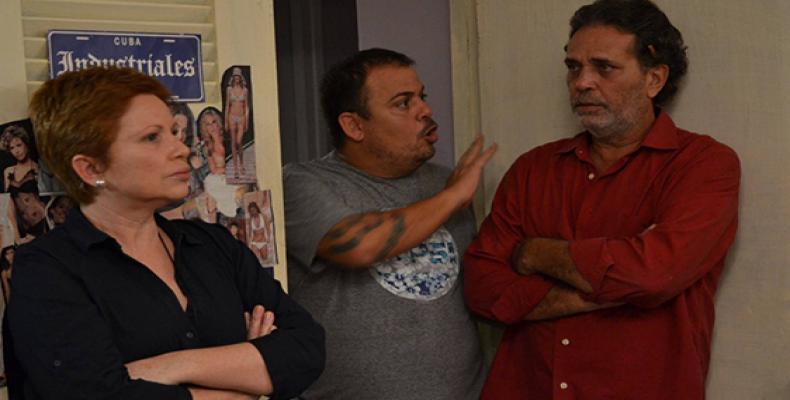
(Image of production of Ya no es Antes (2016).